Pillows · A practical guide
Pillow Loft Explained: Choosing Fill, Firmness, and Neck Support
A pillow can seem simple until the middle of the night, when a head sits too high, a shoulder presses into the mattress, or a once-plump cushion has flattened into a fold. Loft, firmness, fill, and construction all influence how a pillow feels. The right choice is not a universal model; it is the one that keeps your head and neck comfortable in your usual sleeping position.
What pillow loft means—and what it does not
Pillow loft is its height, especially the height it maintains while supporting your head. A pillow’s uncompressed measurement tells only part of the story. Two pillows can look equally thick on a bed and feel quite different once you lie down: one may compress readily, while the other holds more of its height. In practice, the loft that matters is the loft under your weight.
Firmness describes resistance to compression. It is related to loft, but the two are not interchangeable. A high-loft pillow may be soft and compressible; a lower-loft pillow may feel dense and hold its shape. Fill type, amount of fill, casing, and construction all contribute to that first impression—and to how the pillow behaves through the night.
Think of loft as the space a pillow occupies and firmness as how strongly it pushes back. Neither quality is automatically better. A pillow that feels inviting in the store or at bedtime may still be poorly matched to your body if it leaves your head tipped, your neck strained, or your shoulder crowded. A useful choice begins with how you sleep, then considers how the pillow changes under pressure.
Sleep position sets the starting point
Sleep position offers a practical first clue because it changes the distance between the head and mattress. It does not prescribe one exact pillow height: shoulder width, mattress softness, body shape, and personal comfort matter too. Still, the aim is consistent across positions—support the head without forcing the neck into an uncomfortable angle.
Side sleepers
On your side, the pillow generally needs to fill the space between the ear and the mattress while allowing the head to remain aligned with the rest of the spine. A pillow that is too low may let the head tilt down toward the mattress. One that is too high may push it up. Shoulder width and how deeply the shoulder sinks into the bed affect this gap, so a side sleeper with a softer mattress may need a different loft from someone with similar proportions on a firmer surface.
Firmness matters because a pillow must maintain enough height under the head. A very soft fill may flatten more than expected. A firmer pillow may hold its loft but feel too rigid if the shape or height is wrong. Rather than choosing “firm” by label alone, notice whether the pillow keeps your head comfortably level after you settle in.
Back sleepers
Back sleeping usually calls for a pillow that supports the head without pushing the chin toward the chest. If the loft is excessive, the head may be tipped forward; if it is too low for your body and mattress, the head may feel unsupported. A moderate, stable profile is a common starting point, but the right height depends on how your shoulders and upper back rest on the mattress.
Some people prefer a pillow with a little give around the head, while others want more consistent support. Both can be comfortable when the pillow remains at a suitable height. Avoid treating a pronounced contour or a particular firmness label as a guarantee of neck support: fit is personal, and comfort is the test.
Stomach sleepers and combination sleepers
Stomach sleepers often find that a lower, softer pillow creates less upward lift beneath the head. A thick, resistant pillow can make the head sit higher than feels natural. Some stomach sleepers choose a very low pillow or none, while others prefer a thin layer of cushioning. There is no need to force a particular approach if it is uncomfortable; try small changes and pay attention to how your neck feels.
Combination sleepers move between positions and may benefit from a pillow that adapts rather than locking into one shape. Adjustable fill can make it possible to change the height gradually. A pillow that springs back consistently may also suit someone who turns often, while a deeply compressible fill can feel different after each repositioning. Consider the position you spend the most time in, but account for how the pillow feels when you move.
Shoulder width, mattress feel, and the whole sleep surface
A pillow does not work in isolation. A wider shoulder can create a larger gap between the head and mattress when side sleeping, while a narrower shoulder may need less height. But body measurements alone do not settle the question. A mattress that lets the shoulder sink further can reduce the gap; a firmer surface may leave more space to bridge. Your sleeping posture and the way your mattress responds are part of the same equation.
Changes to the bed can change how a pillow feels. A new mattress, a mattress topper, or even a different sleeping position can alter the height your head needs. When testing a pillow, use your usual mattress and allow enough time to settle into your typical position. A quick squeeze with your hand provides information about firmness, but it cannot reproduce the way the pillow supports your head for hours.
For a simple check, lie down in your usual position and notice whether your head feels level and your neck relaxed. If you sleep on your side, check whether your head seems to slope up or down relative to your body. If you sleep on your back, notice whether your chin feels pushed toward your chest. These observations are not a medical assessment; they are practical clues about whether the height and feel suit you.
Natural pillow fill: different fibers, different behavior
Fill influences how a pillow compresses, recovers, and manages day-to-day use. Natural fills are not a single category with one predictable feel. Wool batting, loose wool clusters, and layered wool batting can all produce distinct results, depending on how they are processed and assembled. The cover matters as well: a tightly constructed casing may hold fill in a more defined shape, while a more flexible one may allow it to shift.
Wool is used in pillows for its breathable feel and ability to take up moisture. Its behavior depends on construction. Batting is formed into layers; it tends to create a more uniform surface, though it may settle with use. Wool clusters or puffs are loose pieces of fiber inside a casing. They can compress and move more freely, and some designs let the user add or remove fill to adjust loft. Neither construction is inherently superior. One prioritizes a relatively even profile; the other may offer more direct control over the amount of fill.
When comparing natural pillow fill, look beyond the material name. Ask whether the fill is fixed, layered, or loose; whether the pillow can be opened; how much adjustment is possible; and whether the fill can be washed or only aired. Those details affect the daily experience more than a broad label such as “natural” or “supportive.”
Layered batting
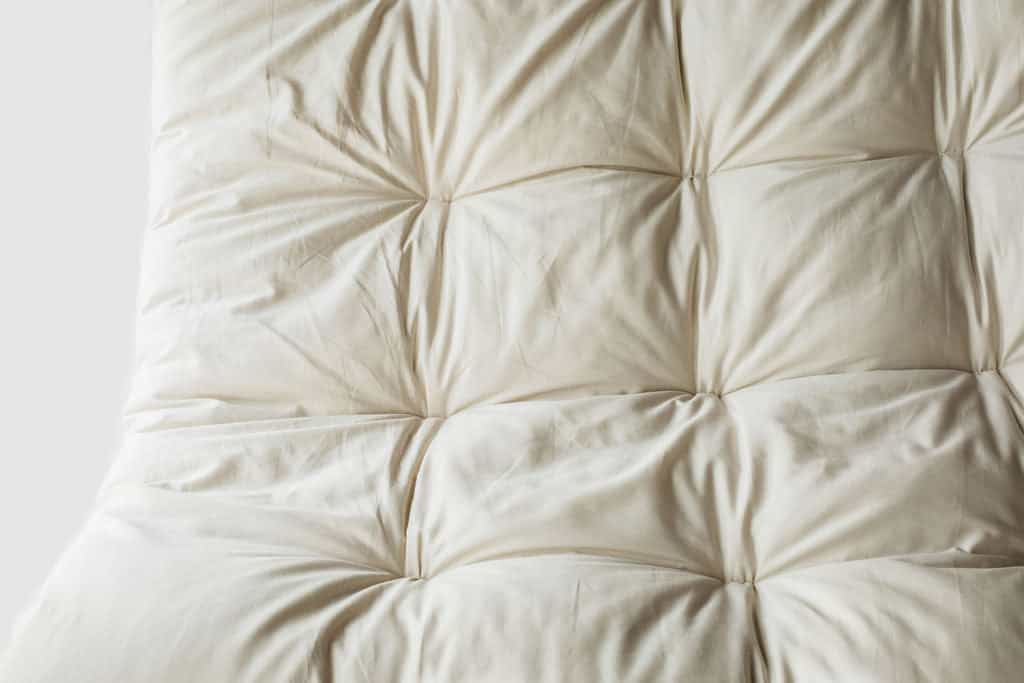
Layered batting places prepared fiber in sheets inside the pillow. It can offer a smooth, even feel and a more consistent structure than loose clusters. Depending on the design, layers may be available in different thicknesses, but the user may not be able to remove them after purchase. Over time, batting can settle or compress, so care guidance and expectations about loft retention are worth checking.
A pillow made with layered wool batting, such as the Certified Organic Wool Bed Pillows, illustrates this construction. Its fill is built in layers within an organic cotton sateen case, and the product information notes that the wool layers may settle with regular use. That makes the construction and care details useful to review before deciding whether a layered design suits your preferred height and maintenance habits.
Wool puffs and adjustable fill
Loose wool puffs can be added, removed, or redistributed in some zippered designs. This makes adjustment more direct: if the pillow feels too high, some fill can be taken out; if it feels too low, fill can sometimes be added back. It can take patience to find a comfortable amount, and adjustment should be gradual. Removing too much at once may leave the pillow without enough support; adding too much can make it crowded and firm.
Adjustable wool pillows are not all alike. Some designs make the fill accessible to the user; others are sewn closed and hold a fixed shape. A pillow using wool bolus fill, for instance, can be different from one using a compacted wool layer. Before buying, verify whether the cover opens, what can be adjusted, and whether the fill itself can be washed. In some products, the case is washable while the fiber fill is not.
Fixed-fill and adjustable pillows: the trade-off
A fixed-fill pillow offers simplicity. Its shape and feel are set by the maker, and there is no fill to rearrange after washing or during the search for a preferred loft. That consistency can be appealing if you already know what height and firmness you like. The trade-off is less flexibility: if the pillow is too high, low, or firm, there may be little a user can do to change it.
An adjustable pillow gives you more control, but control brings a small project. It may take several nights to identify a comfortable amount of fill, and the fill needs to be stored safely if removed. Make adjustments in small increments, keep track of what you change, and give each version a fair trial. If several people share the pillow or its contents, changes can be harder to reproduce unless you note them.
Adjustability also has limits. It can alter loft and sometimes the overall feel, but it cannot change every aspect of construction. A pillow with a narrow or firm casing may still feel structured even after fill is removed. Conversely, a pillow with very soft fill may not provide the stable feel someone wants, even when it is full. Consider both what can be adjusted and what remains fixed.
A practical way to choose pillow loft
- Start with your usual position. Identify whether you mainly sleep on your side, back, stomach, or move between positions. Use that as a first guide, not a rule.
- Consider your mattress. A softer surface may let your shoulder sink more deeply; a firmer one may leave a larger gap to fill. Reassess pillow height if your mattress setup changes.
- Compare compressed feel, not just appearance. Pressing a pillow can hint at resistance, but lying on it is more informative. Notice how much height remains under your head.
- Check the construction. Look for fixed batting, loose clusters, an adjustable case, or a sewn design. Ask what can actually be changed.
- Read the care instructions. Confirm whether the whole pillow is washable, whether only the cover can be washed, or whether spot cleaning and airing are recommended.
- Give the choice time. One night may not settle the question. Keep the pillow in its intended setup and notice comfort across several ordinary nights, unless it is clearly unsuitable.
During a trial, avoid changing multiple variables at once. If you adjust fill, leave the mattress and sleep routine unchanged where possible. If you replace both pillow and mattress topper together, it may be harder to tell which change affected the feel. A short note about position, adjustments, and comfort can reveal patterns that memory blurs by morning.
Care, durability, and realistic expectations
Care instructions are part of the pillow’s design, not fine print to discover after a spill. Wool fill may have different care needs from cotton covers, and a washable pillow is not the same as a pillow whose cover alone can be laundered. Some wool pillows are spot-cleaned and aired; others allow the case to be washed separately. Follow the manufacturer’s instructions rather than assuming that all wool products can go in a washing machine.
Wool fibers can settle over time, particularly in pillows that use layered batting. Loose fill may also shift and require redistribution. Gentle fluffing or reshaping can help restore a more even surface when the care guidance allows it. A removable, washable cover can help protect the pillow from routine soil, while airing may be an appropriate way to refresh some wool products. Do not use heat or aggressive washing unless the specific instructions permit it.
Durability depends on fiber quality, construction, use, and care. A pillow that can be adjusted may offer a longer period of useful fit because its loft can change with preference, but adjustability does not guarantee a particular lifespan. A fixed pillow may suit someone who wants a stable, uncomplicated design. In either case, a persistent loss of shape or a feel that no longer supports comfortable rest may be a reason to reassess.
Common mistakes when comparing pillows
- Choosing by loft alone. A pillow’s listed or visible height does not reveal how far it compresses beneath your head.
- Assuming firmness equals support. A very firm pillow can still be the wrong height, while a softer pillow may work well if it maintains a comfortable position.
- Treating all wool fill as identical. Batting, loose puffs, and other constructions behave differently and may have different care needs.
- Ignoring the mattress. Shoulder sink and overall surface feel influence the gap a pillow needs to fill.
- Expecting an adjustable pillow to solve every mismatch. Adjustment changes the amount or distribution of fill, not every feature of a pillow’s shape or casing.
- Skipping the care label. Washability varies. A washable cover does not mean the wool fill can be washed.
When comfort needs more than a new pillow
A pillow is a comfort choice, not a treatment for pain or a substitute for professional advice. If neck discomfort is persistent, severe, follows an injury, or comes with other concerning symptoms, seek guidance from a qualified health professional. A new pillow may improve a poor fit, but it cannot diagnose or resolve every cause of discomfort.
For everyday selection, keep the goal modest and useful: find a height and feel that allow you to rest comfortably in your normal position. No single fill, firmness, or loft works for everyone. A thoughtful comparison of position, mattress, construction, and care is more reliable than chasing a universal “best pillow.”
The bottom line
Pillow loft is the height that remains under your head; firmness is the resistance you feel as the pillow compresses. Sleep position gives you a starting point, while shoulder width, mattress feel, and personal preference refine the choice. Natural fills add another layer of variation: layered batting tends toward an even, fixed structure, while adjustable wool puffs can let you customize the amount of fill.
Before choosing, ask three practical questions: Does the pillow keep my head comfortable in my usual position? Can I change the loft if my first estimate is off? And can I care for it in the way its construction requires? The answers are more useful than a promise printed on a label. A well-chosen pillow does not need to feel dramatic. It simply needs to make the space between a long day and a good night a little easier.