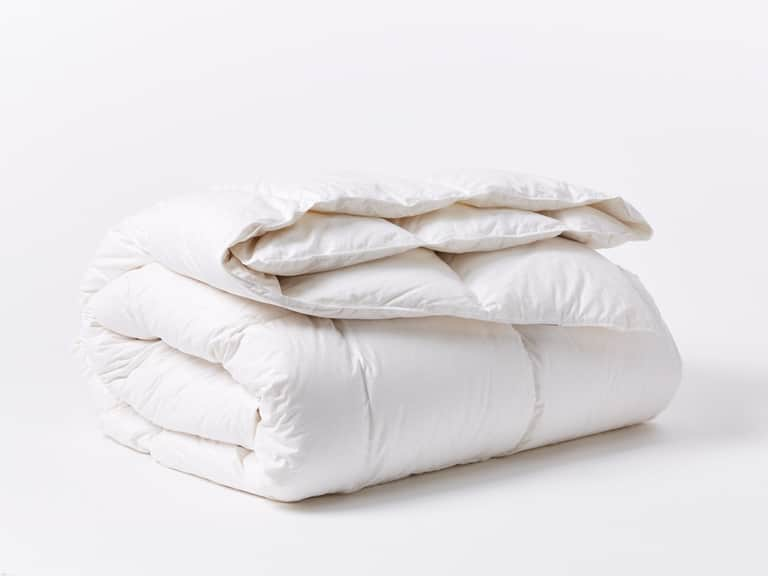
Down comforters are insulated bedding layers designed to retain warmth while remaining soft and flexible. Their fill creates air pockets that help limit heat loss, and the outer shell contains the down for comfortable use. Warmth, weight, fill quality, and construction are key characteristics to consider when comparing comforters for different sleep environments.
The Winter Weight Down Duvet Insert is designed for colder rooms and sleepers who prefer substantial insulation. Its down fill provides warmth without requiring a rigid or heavy-feeling layer, while the duvet-insert format fits inside a compatible cover. This design can simplify routine care by allowing the cover to be removed and laundered separately.
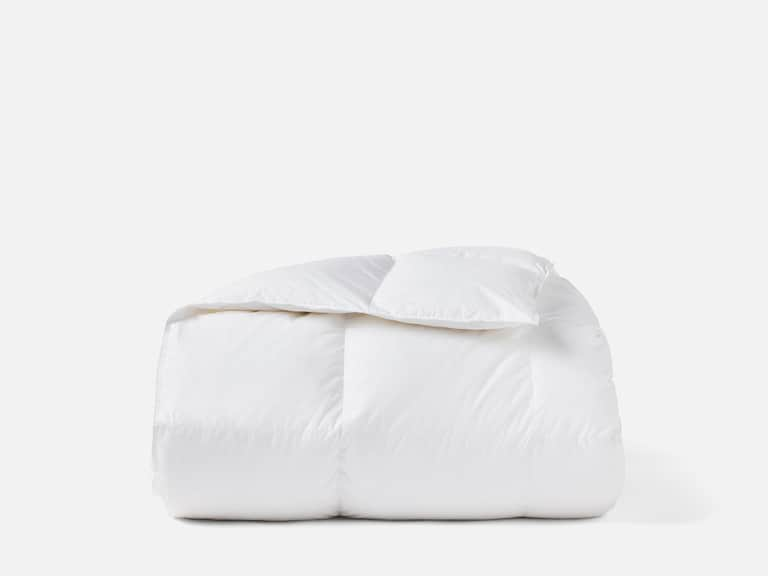
Comforter performance depends on factors such as fill distribution, shell fabric, and stitching. Baffle-box construction, when present, helps keep down spread evenly and reduces cold spots; secure seams also help contain the fill. These details influence how consistently a winter-weight duvet insert insulates across the bed and how well it maintains its loft over time.
Down bedding is often used with sheets, pillows, and other layers to create a sleep setup suited to personal temperature preferences. People comparing bedding may also consider organic mattresses or latex mattresses, which have different materials and support functions. These products complement a comforter but do not replace its role in providing surface warmth.
For households preparing a nursery, temperature regulation and appropriate bedding choices deserve particular attention. A down comforter is generally intended for adult beds and should not be placed in an infant sleep space, where loose bedding can create safety risks. Understanding product purpose, care guidance, and age suitability helps distinguish comforter use from nursery bedding needs.
 Bedding